


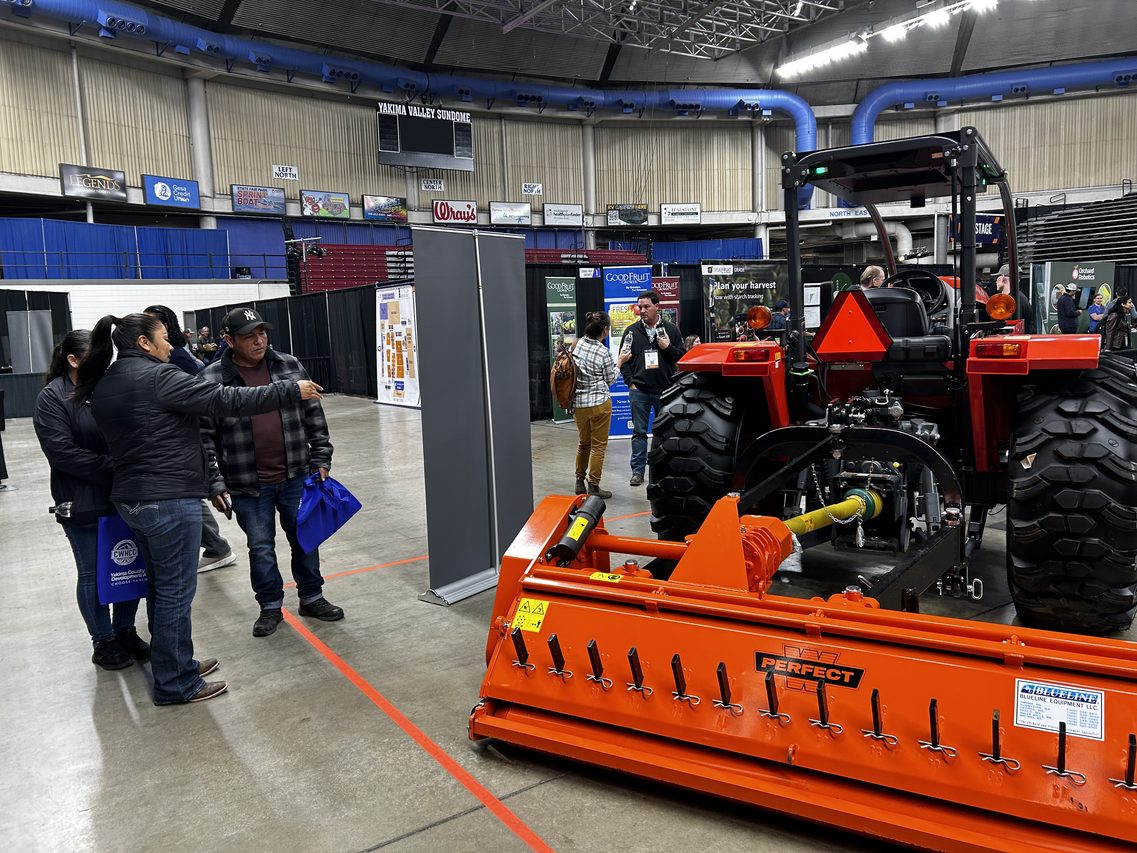
In October, Semillero de Ideas gathered a group of workers to attend the FIRA (Farming Robots in Action) USA trade show in Yakima. Here, they were able to engage with and learn about cutting edge technologies including autonomous tractors, robotic apple picking machines, intelligent spraying machines, and more. The day began with a session tailored to an audience of farmworkers. Researchers and technologists presented their work and shared their vision for the future of agriculture. This vision, however, did not include workers. Ag tech companies are creating machines to eliminate human labor. These companies presented their new robots, autonomous machines, and “intelligent” systems as a positive change for workers, and assured the audience that they wouldn’t lose their jobs and that the technology would support them. Three of the workers shared their reflections with us.
Jesus Gutierrez: “If agriculture changes, we must create opportunities for workers to train, adapt and develop new skills. It’s not about stopping progress or pitting people against machines. It is about ensuring that technology responds to the reality of the farm and that its implementation generates sustainable benefits for producers, workers and the entire agricultural supply chain. The agriculture of the future will need smarter machines, but it will also need to listen to the intelligence of those who have dedicated their lives to working the land.”
Yulianna Montes: “It is worrisome because if in the future more machinery like that is in the fields, then less work is available for people who depend on that job. Many people do not have the opportunity of another better job and we only work in the fields. It is worrying because already there are not enough jobs for people. The machines will never do the job better than a human…”
Genaro Pavel Garcia: “My biggest concern is that people who work in the fields will not be taken into account in the age of orchard automation. I understand that they seek to lower costs, but do not take away the opportunities of all the people who have dedicated their lives to this noble work. Don’t only seek to automate a job, but seek to improve the quality of life (salary) for those workers who are willing to walk the path of an automated era.”
The changes these agricultural technology companies are proposing are not just harmful to workers, but to the broader well-being and economies of the rural communities. The future of agricultural technology innovation depends on the expertise of workers, working together with other stakeholders including growers, legislators, academics, and technologists.